

Private Labels Are Changing the Grocery Landscape
Today’s grocery shoppers are increasingly focused on value, and retailers are responding by expanding their private-label offerings. What was once viewed primarily as a lower-priced alternative to national brands has evolved into a significant part of the grocery business, with retailers investing in product innovation, packaging, and brand development.
According to research published by Circana in March 2026, U.S. private-label consumer packaged goods (CPG) sales reached $330 billion, accounting for approximately 24% of unit sales and 23% of dollar sales. Research from FMI – The Food Industry Association also shows that shoppers increasingly choose store brands for their quality and value, not simply their lower prices.
For grocers, this growth presents an interesting merchandising challenge.
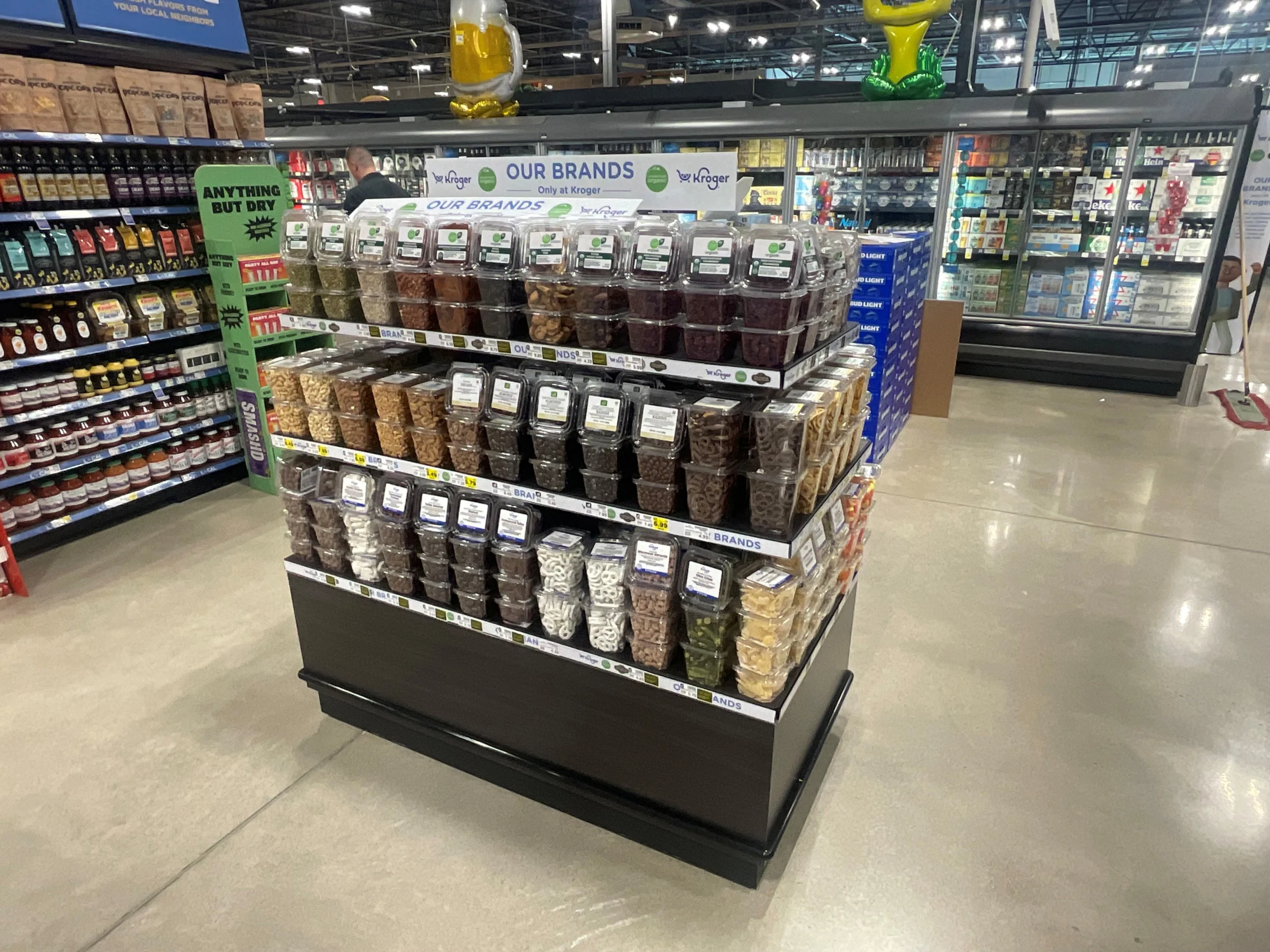
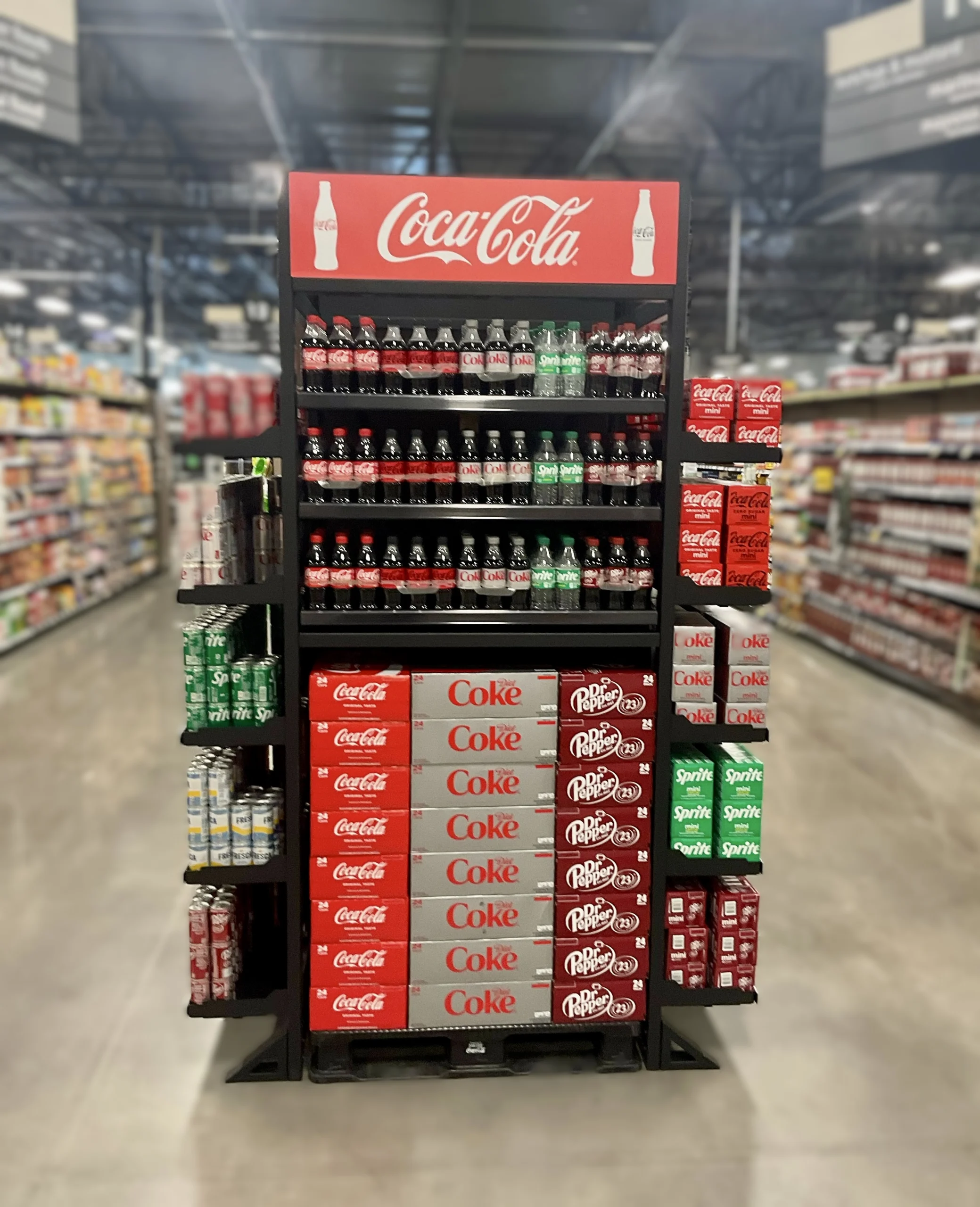
Historically, national CPG brands have helped support the in-store experience through promotional allowances, branded displays, advertising programs, and retail media investments. As retailers devote more shelf space and promotional attention to their own brands, they assume greater responsibility for creating awareness, encouraging trial, and maintaining shopper interest.
But national brands remain essential partners. Their promotional investments, product innovation, and marketing capabilities continue to contribute to an engaging retail environment. The question is how grocers can support both private-label growth and national-brand promotion while controlling the cost of keeping their stores fresh and relevant. These priorities are central to effective grocery and convenience store fixture programs.
Creating Excitement Without Constantly Reinvesting
Grocery merchandising must continually evolve. Seasonal promotions, new product introductions, changing consumer preferences, and competitive pricing require frequent updates to the shopping environment.
Traditionally, many promotional programs have relied on dedicated displays, custom graphics, or fixtures designed for a specific product or campaign. These can be highly effective, particularly when a national brand wants to create a distinctive presence. However, not every promotion requires an entirely new display.
Retailers have an opportunity to invest in adaptable retail display fixtures designed for continuous change. Modular fixtures, interchangeable graphics, adjustable shelving, and integrated digital capabilities can accommodate different products and campaigns while preserving the underlying structure.
Consider a grocery endcap that supports a retailer’s private-label grilling products during the summer, transitions to back-to-school snacks in August, and features a national brand’s holiday promotion later in the year. The fixture remains in place. The products, messaging, and presentation change.
This approach can reduce the need for repeated fixture purchases while giving retailers greater flexibility in planning promotional calendars. It also supports the long-term thinking described in Colony Display’s article on retail fixture lifecycle planning.
One Merchandising Platform, Multiple Opportunities
Flexible merchandising should not mean generic merchandising. National brands invest heavily in distinctive packaging, graphics, and promotional experiences. Their ability to stand out at the point of purchase remains important, and any shared merchandising platform must accommodate that need.
The objective is to standardize the infrastructure without sacrificing the individuality of the brand experience. Interchangeable graphic panels, removable headers, adjustable product supports, and adaptable shelving can allow a common fixture platform to take on very different appearances.
A retailer can use the same footprint for private-label promotions and brand-sponsored programs while maintaining the visual identity appropriate to each campaign. This approach can also support CPG brand activation and point-of-purchase display programs that require distinctive brand presentation.
Digital Technology Adds Another Dimension
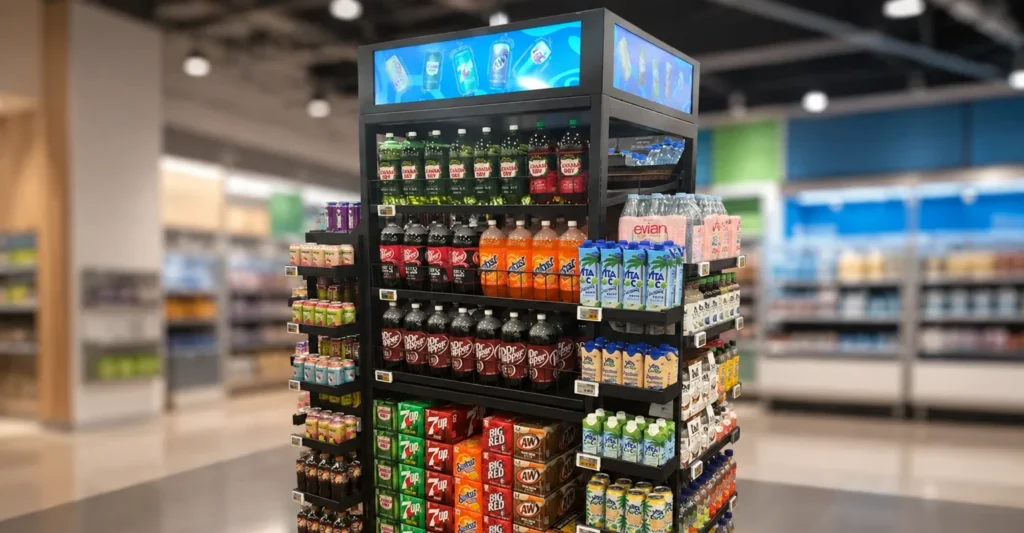
Integrated screens can support product education, seasonal messaging, recipe inspiration, promotions, and branded content without requiring printed graphics to be replaced each time the message changes.
Digital is not necessarily the right answer for every application. Screens require investment, content management, and ongoing support. For many programs, interchangeable printed graphics remain a practical and economical solution.
The greatest opportunity may be combining permanent, adaptable fixtures with the right mix of printed graphics and digital content. Learn how Colony Display approaches digital display integration in retail fixtures, including screens, power, ventilation, and product access.
Making In-Store Merchandising More Valuable
Flexible infrastructure can also create new opportunities for collaboration between retailers and their CPG partners. A grocer with standardized promotional zones could offer brands consistent display footprints, established graphic specifications, and optional digital capabilities across multiple locations.
This may simplify campaign planning, reduce installation complexity, and make it easier to execute promotions consistently. At the same time, the retailer retains the flexibility to use those spaces for its own private-label initiatives when brand-sponsored campaigns are not scheduled.
Planning for these different uses early in the process is important. Retail fixture engineering and design support can help teams evaluate structural requirements, product configurations, graphics, and potential future updates before full production.
Thoughtful Merchandising Also Requires Restraint
Research published in the Journal of Retailing demonstrates that display location can influence both category purchases and brand selection. More recent research published in PLOS One in April 2026 found that displays positioned within aisles can create spatial congestion that reduces purchasing behavior.
The lesson is not that stores need more displays. They need merchandising environments that make products easier to discover without overwhelming the shopper.
Flexible fixtures, purposeful placement, and coordinated messaging can help retailers create visual interest while maintaining a clean, navigable store. Retail display prototyping can help teams assess real-world layouts and fixture requirements before a broader rollout.
Designing for What Comes Next
As private-label brands become more important to grocery retailers, the economics of in-store promotion will continue to evolve. Grocers will need to balance investment in their own brands with the value national-brand partners bring through innovation, advertising, and promotional support. Both have a role in creating a compelling shopping experience.
For fixture manufacturers and retail merchandising partners, the opportunity is to think beyond the requirements of an individual promotion and consider how a display can perform over its entire useful life.
At Colony Display, we believe effective fixture development begins with understanding how retailers operate, how merchandising programs change, and how displays can accommodate future needs without unnecessary reinvestment.
The future of grocery merchandising may not be defined by how many new displays retailers introduce, but by how effectively they can adapt the ones they already have. When fixtures are designed for flexibility, grocers and national brands gain more opportunities to engage shoppers, introduce products, and keep the in-store experience relevant.
Frequently Asked Questions About Flexible Grocery Merchandising
What are flexible grocery merchandising fixtures?
Flexible grocery merchandising fixtures are displays designed to accommodate changing products, graphics, and promotions. Features such as adjustable shelving, removable headers, and interchangeable panels help retailers update the presentation without replacing the entire fixture.
How can modular grocery displays support private-label and national brands?
A shared modular display system can use the same structural footprint for a retailer’s store brands and for national-brand promotions. Merchandising teams can change products and branded visual elements to suit each campaign.
Are digital screens necessary for every grocery display?
No. Digital signage can be helpful when messaging changes frequently, but it also adds technology and maintenance requirements. For some programs, replaceable printed graphics are the more practical option.
Why does display placement matter in grocery stores?
Display locations can influence product visibility and shopping behavior, but placing too many fixtures in aisles can restrict movement. Effective grocery display planning balances merchandise exposure with a comfortable, navigable shopping environment.
Planning a grocery or convenience merchandising program? Contact Colony Display to discuss adaptable retail fixtures, branded displays, and scalable store execution.
Research and Sources
- Circana (March 2026): U.S. Private-Label CPG Sales Reach $330 Billion
- FMI – The Food Industry Association (June 2026): Power of Private Brands Consumer Research
- Journal of Retailing (2022): Impact of Different Types of In-Store Displays on Consumer Purchase Behavior
- PLOS One (April 2026): When Merchandise Crowds the Aisle and Carts Crowd the Shopper