

Retail Insights
A Perspective from Colony Display
Retail Insights is Colony Display’s editorial series exploring the strategies behind successful retail environments. Drawing on decades of experience supporting retailers, brands, and design firms, each article examines the operational decisions that shape store performance—from fixture engineering and merchandising to rollout execution and long-term lifecycle planning.
Why Lifecycle Planning Matters More Than Retail Fixture Cost
Retail fixture discussions often begin with a simple question: What will it cost?
It is a reasonable place to start, especially when retailers are managing budgets across multiple locations, remodels, or new store openings. But the initial purchase price tells only part of the story. A more useful question is: What will this retail fixture cost to own, maintain, adapt, and support over the next ten years?
That shift in perspective changes the conversation entirely.
Instead of evaluating a fixture solely by its manufacturing cost, lifecycle planning considers everything that happens after installation. Maintenance requirements, replacement parts, merchandising changes, labor, repairs, future remodels, evolving technology, and the ability to reuse or reconfigure components all influence the true cost of ownership.
This broader approach is commonly referred to as lifecycle or total-cost-of-ownership planning. The National Institute of Standards and Technology uses lifecycle cost analysis to evaluate expenses such as initial investment, maintenance, repair, replacement, operation, and disposal over time.
For retailers managing large-scale retail fixture programs, looking beyond the initial price can lead to better engineering decisions, more efficient maintenance, and a fixture package that performs more effectively throughout the life of the store.
Opening Day Is Only the Beginning

Every store fixture looks its best on opening day. Finishes are clean, shelves are aligned, graphics are new, and every component is exactly where it was intended to be.
The real test begins after the store opens.
Employees begin stocking merchandise every day. Shopping carts and equipment make contact with corners and bases. Seasonal products require different configurations. Graphics are changed. Shelves are adjusted. Cleaning chemicals repeatedly touch surfaces. Customers lean against displays, pull on components, move merchandise, and interact with fixtures thousands of times.
A retail fixture begins aging the moment it enters service. That is not a failure of the product; it is simply the reality of the retail environment. The important question is whether the fixture was engineered with that reality in mind.
Effective retail fixture engineering and design considers far more than how a display looks in a rendering or during installation. Engineers must also consider how materials will wear, how components will be serviced, which connections will experience repeated stress, how easily merchandising elements can be changed, and whether individual parts can be replaced without removing the entire fixture.
Those decisions can have very little visual impact on opening day, but they often determine how well a fixture performs years later.
The Hidden Cost of Cheap Retail Fixtures
Reducing the upfront cost of a store fixture may appear to create immediate savings. In some cases, however, those savings simply move expenses further down the road.
A shelf that cannot be adjusted may need to be replaced when a merchandising strategy changes. A proprietary bracket that is difficult to source can turn a simple repair into a larger replacement project. A damaged component that cannot be removed independently may require an entire retail display fixture to be rebuilt. Hardware that varies from store to store can make maintenance more complicated and force operators to manage multiple replacement inventories.
None of those costs typically appear in the original capital budget.
Instead, they surface gradually through maintenance requests, replacement orders, store remodels, field labor, expedited shipping, downtime, and lost merchandising flexibility.
That is why the least expensive fixture to manufacture is not always the least expensive fixture to own. For multi-location retailers, even a relatively small maintenance issue can become significant when multiplied across dozens, hundreds, or thousands of stores.
Designing Custom Retail Fixtures for Year Five
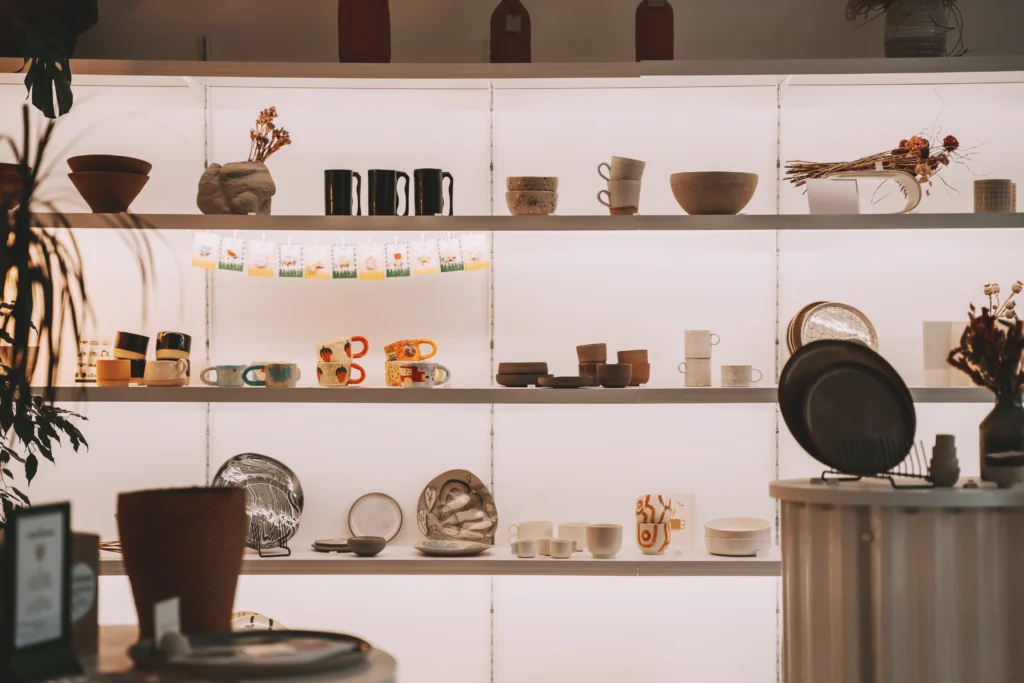
Retail environments rarely remain unchanged for very long.
Brands evolve. Product categories expand and contract. Departments move. Technology becomes part of the shopping experience. New merchandising strategies are introduced. Customer expectations change, and store layouts are refreshed to respond.
Retail fixtures have to function within that changing environment.
That is where lifecycle planning begins to influence design. A well-planned custom retail fixture may incorporate modular construction, standardized hardware, replaceable components, adjustable shelving, accessible fasteners, interchangeable accessories, or lighting systems that can be serviced or upgraded without replacing the entire display.
These details may seem small during the early stages of development, but they can dramatically affect how easily a fixture adapts several years later.
The National Retail Federation continues to examine how changing technology, customer behavior, and store experiences are reshaping physical retail. Its discussion of future retail trends and evolving consumer behavior reinforces why physical stores increasingly need to support change rather than remain fixed.
For retailers, the goal is not necessarily to predict exactly what the store will look like five years from now. It is to avoid designing fixtures that make future changes unnecessarily difficult or expensive.
This is also where retail fixture prototyping becomes especially valuable. Prototypes allow teams to evaluate structural performance, merchandising flexibility, materials, hardware, lighting, accessibility, and serviceability before those decisions are multiplied across a full production run.
Executive Perspective
The most expensive fixture is not always the one that costs the most to build. It is often the one that has to be replaced years before it should.
Documentation Is Part of the Retail Fixture Program
One of the most overlooked components of a successful retail fixture program is documentation.
Engineering drawings, finish specifications, hardware schedules, material callouts, replacement part information, assembly instructions, and store-specific revisions may seem like administrative details when a fixture is being produced. Years later, those records can become extremely valuable.
When a fixture needs to be repaired, expanded, reproduced, or modified, accurate documentation allows retailers and manufacturing partners to understand exactly how the original product was built. Without that information, companies may be forced to reverse-engineer a fixture they already purchased simply to determine the correct component, finish, or construction method.
That process takes time and introduces unnecessary uncertainty.
Strong documentation also makes it easier to maintain consistency across a large retail network. If a fixture changes during a rollout, revised drawings and specifications provide a record of which version was installed in each location. That information can simplify future replacement orders, remodels, and store refreshes.
In that sense, documentation is not separate from lifecycle planning. It is part of the asset itself.
Material Selection Has Long-Term Consequences
Lifecycle planning also changes how materials and finishes are evaluated.
Material selection is often discussed in terms of appearance and cost, but performance should be an equally important consideration. The right material depends on where the fixture will be used, how frequently customers will interact with it, the weight it must support, the cleaning procedures used in the store, and the amount of physical wear it is likely to experience.
A display table, checkout fixture, wall system, cabinet, shelving unit, and decorative feature may all require different combinations of wood, metal, laminate, glass, plastic, hardware, lighting, and protective finishes.
There is rarely one material that is universally best. The goal is to match the material to the intended application.
An experienced retail fixture manufacturer can help evaluate those tradeoffs during development and determine how material choices may influence durability, appearance, manufacturability, consistency, and future maintenance.
A finish that looks slightly less expensive on a prototype, for example, may require significantly more repair or replacement over the life of a national program. Conversely, an unnecessarily expensive material may increase the project budget without delivering meaningful additional performance.
Lifecycle planning helps teams find the appropriate balance.
Standardization Makes Retail Fixture Programs Easier to Manage
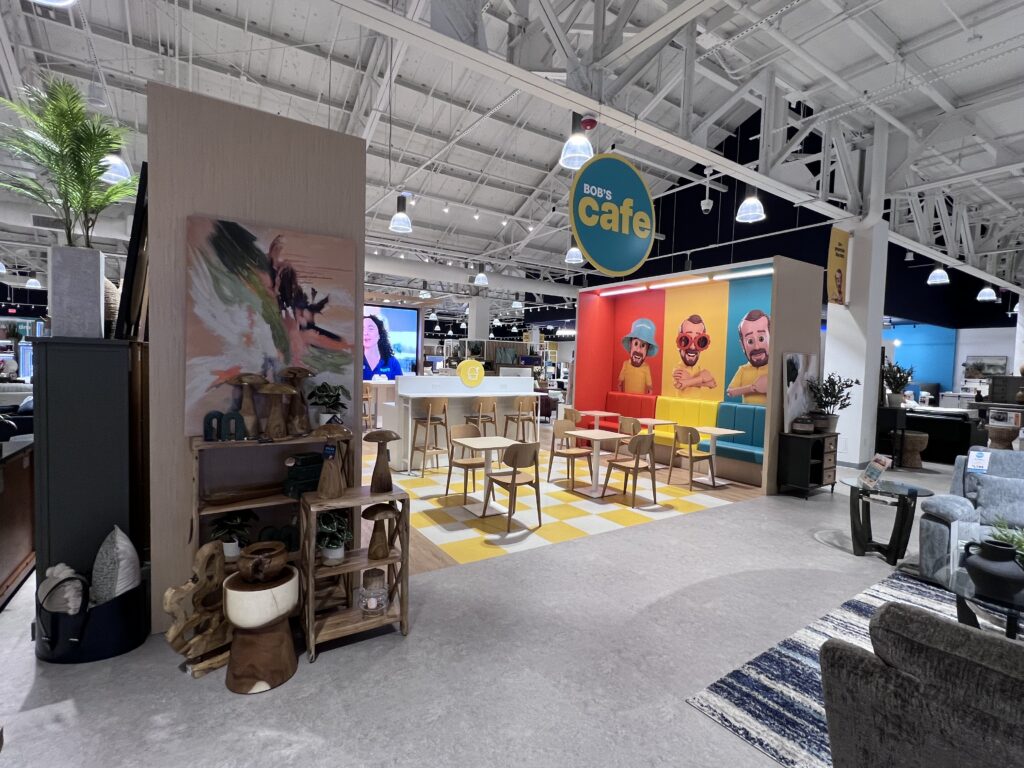
Standardization is another important element of long-term fixture performance, particularly for retailers operating many locations.
Without a coordinated strategy, similar fixtures can gradually become more complicated over time. One store may use one shelf bracket while another uses a slightly different version. Fasteners may vary between fixture generations. Lighting systems may change without considering replacement availability. Individual components may be redesigned even when the existing solution is still effective.
Eventually, maintenance teams can find themselves managing a large collection of nearly identical parts that are not actually interchangeable.
Standardized hardware and components help reduce that complexity.
When appropriate, using common fasteners, brackets, shelf standards, lighting components, and replacement parts can simplify inventory management, field repairs, employee training, future production, and store remodels.
Standardization does not mean every retail environment has to look identical. Custom retail fixtures can still reflect different store formats, departments, footprints, and brand experiences. The objective is to create a repeatable system underneath those variations so that each location does not become a completely separate engineering exercise.
For growing retailers, that repeatability can become a significant operational advantage.
Lifecycle Planning Extends Into Retail Rollouts
The lifecycle of a fixture is influenced by more than its physical construction. Packaging, transportation, installation, documentation, and rollout coordination can all affect how successfully a fixture performs once it reaches the store.
For example, a fixture designed for easy field assembly may reduce installation time and make future replacement easier. Packaging strategies can protect vulnerable finishes or components during transportation. Clear labeling can help installers identify the correct parts at the correct location. Accurate store-level documentation can make it easier to determine what was installed years later.
These considerations become increasingly important when a retailer is deploying fixtures across many locations.
Coordinated retail rollout logistics help connect manufacturing with store execution so that fixtures, replacement components, and project information move through the program in a controlled and repeatable way.
That same planning can also benefit the retailer long after the original rollout is complete. When fixture configurations, revisions, components, and installation details are documented correctly from the beginning, future refreshes and replacement programs can be executed with far less uncertainty.
Lifecycle Thinking Changes the Retail Fixture Conversation
When retailers begin evaluating fixtures according to total ownership rather than initial price alone, priorities start to change.
Engineering becomes more valuable because small design decisions can influence years of performance. Prototyping becomes more important because problems can be identified before mass production. Material selection becomes more strategic because durability and repairability matter alongside appearance. Standardization becomes more valuable because it simplifies future maintenance. Documentation becomes an operational tool instead of an afterthought.
Most importantly, future flexibility becomes part of today’s design process.
Instead of asking only how much a fixture will cost to manufacture, retail teams can begin asking more useful questions:
- How long should this fixture reasonably remain in service?
- Which components are most likely to experience wear?
- Can those components be replaced independently?
- Can shelving and merchandising configurations change over time?
- Can graphics, lighting, or accessories be updated without rebuilding the fixture?
- Will replacement parts remain practical to source?
- Can the fixture be reused or adapted during the next store remodel?
Those questions encourage teams to think about retail fixtures as long-term operating assets rather than one-time purchases.
Retail Insight
Great retail fixture programs are not defined solely by what happens during manufacturing or by how a store looks on opening day.
They are defined by how effectively the fixtures continue supporting the business after months and years of daily use.
Retail environments will continue to evolve as merchandising strategies change, technology becomes more integrated into stores, brands refresh their physical spaces, and customer expectations shift. Fixtures designed without that future in mind may create unnecessary limitations. Fixtures designed around lifecycle performance give retailers more options.
That does not mean every fixture needs to be overengineered or designed to last forever. It means the expected life of the fixture should be considered intentionally, and the decisions made during engineering, prototyping, manufacturing, and rollout should support that expectation.
The true cost of a retail fixture is not measured only when it is purchased. It is measured every day the fixture is expected to perform.