

Retail fixture prototyping is one of the most important steps in successful national retail rollout execution. Before custom fixtures move into large-scale production, engineering and prototyping must validate how displays will perform in real retail environments.
A fixture may look impressive in a rendering or design presentation, but national rollout success is determined by how that fixture performs in stores, under real operational conditions, with real customers, store associates, installation teams, and ongoing replenishment requirements.
The most successful retail fixture programs are not driven by design alone. They are built through collaboration between fixture engineering, in-house prototyping, manufacturing, and rollout execution teams long before production begins.
Why Retail Environments Quickly Expose Fixture Problems
Retail fixtures operate in demanding environments every day. Displays are assembled, stocked, cleaned, moved, bumped by carts, handled by customers, and maintained by store associates across hundreds or thousands of locations.
Small issues that appear insignificant during the design phase can become expensive operational problems once a retail rollout scales nationally.
Without proper retail display prototyping, common failures often include:
- Product fit and spacing issues
- Structural instability
- Difficult assembly or installation
- Freight and packaging damage
- Material durability concerns
- Poor customer interaction
- Replenishment inefficiencies
- Lighting or electrical integration problems
- Inconsistent in-store execution
When multiplied across a national retail rollout, even minor design flaws can lead to installation delays, field modifications, fixture replacements, operational disruption, and retailer frustration.
Prototype-before-production processes help identify and solve these issues before they impact manufacturing and rollout execution.
Why Retail Fixture Engineering Collaboration with Design Is Critical
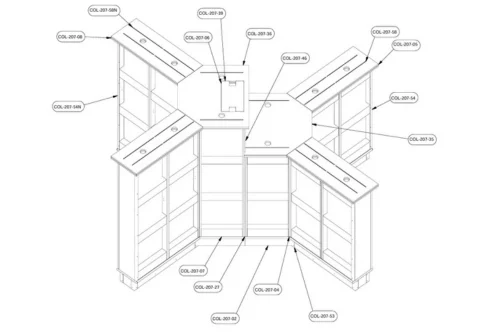
Successful custom retail fixtures begin with experienced engineering teams that understand how displays perform in real store environments, not just on CAD drawings or renderings.
Retail fixture engineering requires balancing multiple priorities simultaneously:
- Structural integrity
- Product presentation
- Manufacturing efficiency
- Material performance
- Freight optimization
- Installation requirements
- Long-term durability
- Program scalability
- Overall program cost
This is where experienced fixture engineers create significant value. True value engineering is not simply reducing cost. Effective fixture engineering balances appearance, functionality, manufacturability, durability, and expected fixture shelf life within the retail environment.
Experienced engineering teams understand how fixtures behave after installation and during daily use. That real-world knowledge helps prevent production issues before manufacturing begins.
Why Design, Engineering and Prototyping Must Work Together
Some of the most common retail rollout failures occur when design, engineering, prototyping and manufacturing operate independently.
A visually compelling fixture concept does not always translate into a manufacturable, durable, or operationally efficient retail solution. Early collaboration between design and engineering teams helps ensure custom retail fixtures can successfully perform at store level while remaining scalable for production.
Collaboration between fixture design and engineering improves:
- Manufacturability
- Structural performance
- Product accessibility
- Material selection
- Assembly efficiency
- Installation consistency
- Store associate usability
- Long-term fixture reliability
The strongest retail fixture programs are developed through continuous collaboration between design, engineering, prototyping, and manufacturing teams, not through isolated departmental handoffs or outside prototyping companies.
Why In-House Retail Fixture Prototyping Matters
Digital renderings and CAD models are valuable tools, but physical retail fixture prototyping reveals issues that cannot always be identified on a screen. An in-house prototyping department allows teams to physically validate fixture performance before production tooling and manufacturing begin.
Retail display prototyping helps validate:
- Materials and finishes
- Product placement
- Structural stability
- Customer interaction
- Assembly methods
- Component tolerance
- Lighting integration
- Shipping durability
- Installation procedures
- Replenishment functionality
Most importantly, in-house prototyping creates immediate collaboration between engineering, design, project management, operations, and manufacturing teams. Engineers can physically inspect the fixture, identify weaknesses, refine components, and make adjustments in real time. Manufacturing teams can identify production efficiencies. Project managers can evaluate installation concerns. Clients can interact with the fixture exactly as store teams and consumers eventually will.
This process dramatically reduces surprises later in production and national rollout execution.
The Real Cost of Skipping Prototype Before Production Processes
When retail fixture programs move directly from design into manufacturing without proper prototyping and validation, risk increases substantially.
Common downstream issues include:
- Production delays
- Costly engineering revisions
- Freight failures
- Installation problems
- Store-level rework
- Fixture instability
- Inconsistent rollout execution
- Increase replacement costs
- Lost rollout time
- Negative retailer experiences
The financial impact of correcting problems after production is dramatically higher than identifying them during retail fixture prototyping.
For national retail rollouts, the cost of skipping prototype-before-production validation can multiply quickly across hundreds or thousands of stores.
How Prototype-Driven Manufacturing Improves Retail Rollout Execution
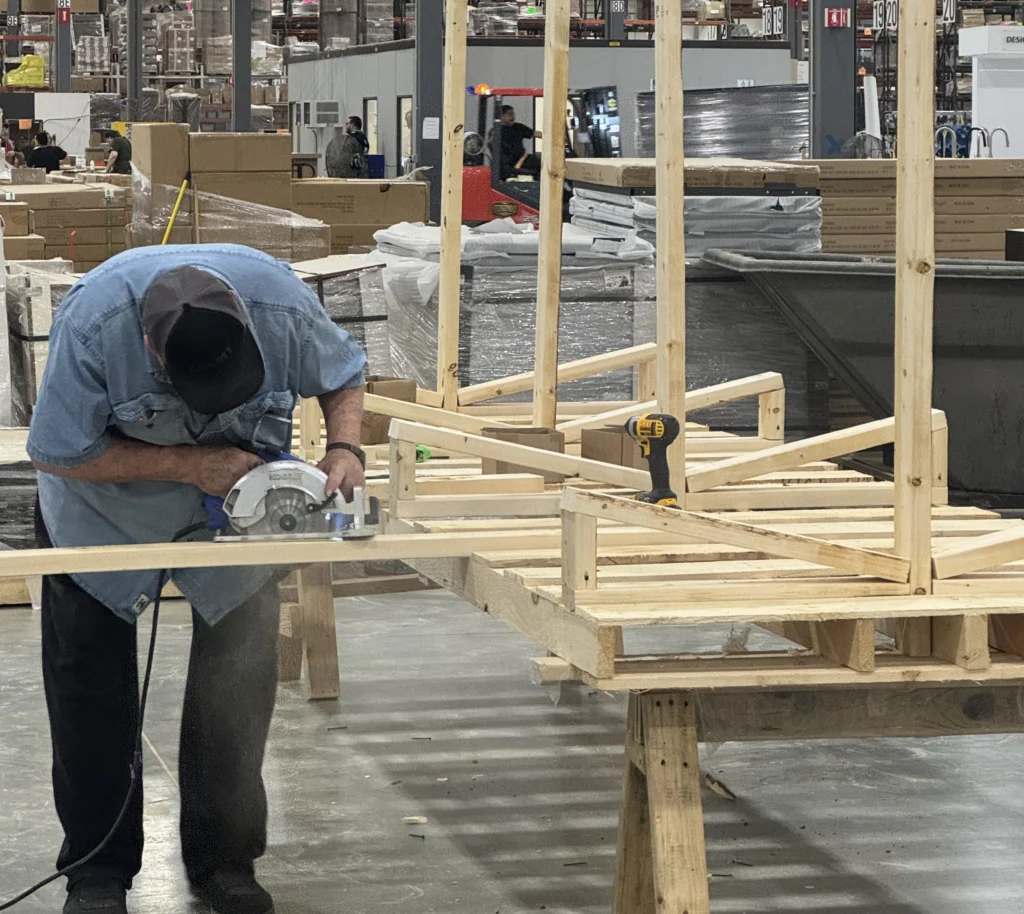
Retail fixture prototyping is not simply a design exercise. It is a critical operational and manufacturing strategy that improves rollout success.
Validated prototypes help improve:
- Production consistency
- Manufacturing efficiency
- Installation speed
- Freight performance
- Store execution
- Timeline predictability
- Program scalability
- Long-term fixture durability
Most importantly, prototype-driven manufacturing reduces risk for retailers, consumer brands, and design firms before large-scale investments are made in production and rollout execution.
From Concept Through National Rollout
Successful retail fixture programs require more than manufacturing capability alone. They require alignment between engineering, design, prototyping, manufacturing, logistics, and rollout execution teams.
At Colony Display, our in-house engineering and full in-house prototyping capabilities allow teams to validate fixture performance before national production begins. By combining collaborative design support, experienced retail fixture engineering, physical prototyping, manufacturing expertise, and rollout execution support, programs move into production with greater confidence, efficiency, and operational readiness.
Because in retail environments, success is not determined by how a fixture looks in a rendering — it is determined by how it performs in the field.