

At its best, custom retail millwork does much more than hold merchandise. It supports customer navigation, merchandising flexibility, employee productivity, inventory flow, brand consistency, and long-term store operations. It also gives retailers a physical system that can adapt as product assortments, store formats, and customer expectations continue to change.
What Is Retail Millwork?
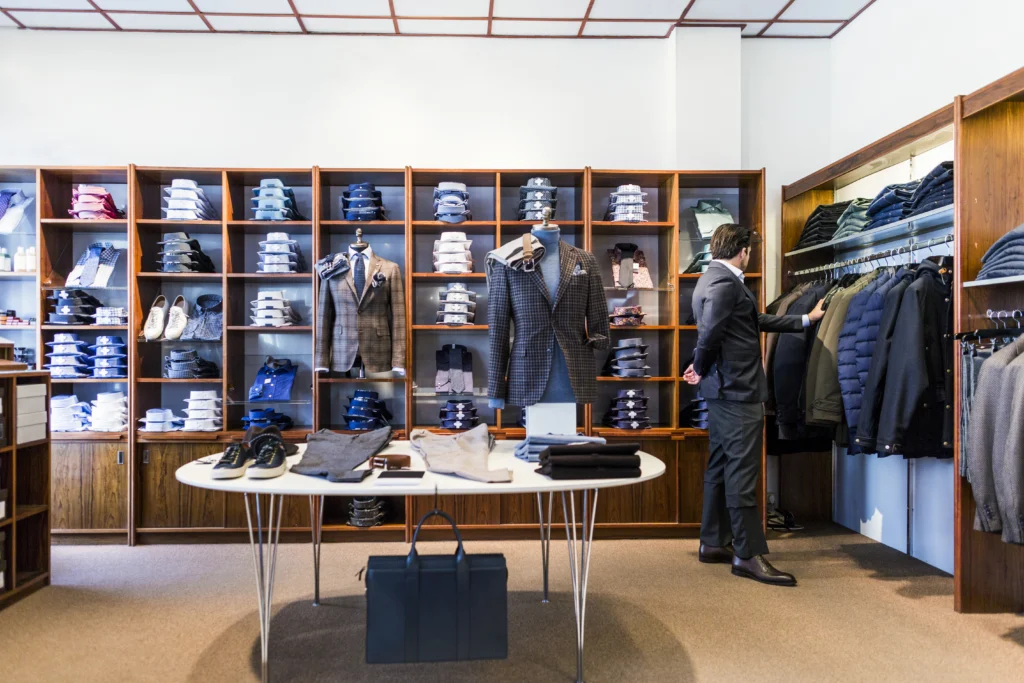
Retail millwork refers to the custom-built architectural woodwork, cabinetry, counters, fixtures, displays, and branded components used throughout a retail environment. Depending on the program, retail millwork may include:
- Cashwraps and checkout counters
- Service desks and consultation stations
- Wall-mounted merchandising systems
- Freestanding retail display fixtures
- Display tables and product platforms
- Cabinetry and storage components
- Shop-in-shop environments
- Custom shelving and product presentation systems
- Department-specific fixtures and branded displays
- Decorative architectural elements
Although the term “millwork” may suggest wood construction alone, modern retail fixture programs frequently combine engineered wood, laminates, metal, acrylic, glass, graphics, lighting, and specialty materials. The goal is not simply to build an attractive object. It is to create a reliable fixture system that performs within a real store environment.
That requires coordination between retail fixture engineering and design support, material sourcing, prototyping, manufacturing, logistics, installation, merchandising, and store operations.
Why Retail Millwork Matters to Store Rollout Programs
Retailers rarely operate a single, perfectly standardized store prototype.
Years of remodels, acquisitions, regional expansion, changing merchandising strategies, and evolving brand standards often create store fleets containing multiple generations of layouts and fixture packages. One location may reflect the newest store design, while another still uses fixtures installed a decade earlier.
Customers should not feel those differences.
Maintaining a recognizable and consistent brand experience across different buildings is one of the most difficult parts of a multi-location retail program. The challenge extends far beyond manufacturing identical pieces of millwork.
Each store may have different:
- Floor plans and department configurations
- Ceiling heights and structural conditions
- Flooring systems and wall construction
- Electrical and lighting infrastructure
- Regional product assortments
- Accessibility requirements
- Legacy fixtures from previous remodels
- Installation schedules and operating restrictions
Successful retail rollout programs account for these variables before fixtures arrive at the store. The objective is not necessarily to make every location physically identical. It is to create an adaptable fixture system capable of delivering the same customer experience under different site conditions.
Executive Perspective: The challenge is not designing one beautiful store. It is designing a system that allows hundreds of stores—each with different histories, layouts, and constraints—to deliver a consistent customer experience.
Custom Retail Fixtures Are Operational Tools
Retail fixtures are often evaluated first by appearance. Retail operations teams eventually judge them by something more important: how well they support the business.
Every fixture influences daily activity inside the store. A visually impressive display can still create operational problems when employees cannot stock it efficiently, damaged parts cannot be replaced, or new product packaging no longer fits.
Before approving a fixture design, retailers and their partners should consider questions such as:
- Can employees replenish inventory quickly and safely?
- Can the fixture accommodate multiple product sizes?
- Can planograms change without replacing the entire fixture?
- Are frequently handled components durable enough for daily use?
- Can damaged shelves, panels, graphics, or hardware be replaced individually?
- Does the fixture provide enough concealed storage?
- Can it be cleaned and maintained using standard store procedures?
- Will it continue functioning after years of customer interaction?
- Can it be packaged, shipped, assembled, and installed efficiently?
The best custom retail fixtures do not simply look good on opening day. They continue supporting merchandising and store operations throughout the life of the program.
Retail Fixture Engineering Creates Consistency at Scale
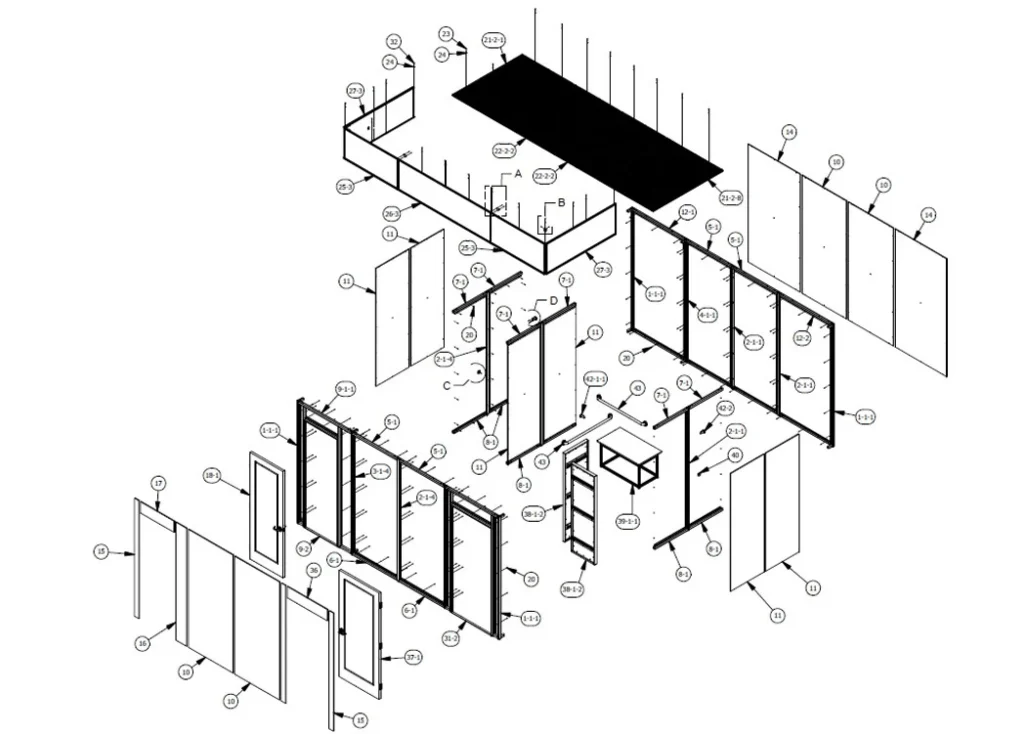
Consistency across a store network begins with disciplined engineering.
A retail fixture concept must balance brand presentation, structural integrity, durability, material efficiency, manufacturability, packaging, installation, and cost. A design that succeeds as a rendering may still require significant refinement before it can be produced reliably across dozens or hundreds of locations.
Effective retail fixture engineering helps translate design intent into a production-ready system. This may involve:
- Reviewing concepts for manufacturability
- Developing detailed engineering and assembly drawings
- Standardizing hardware and repeatable components
- Accounting for material tolerances and site conditions
- Designing replaceable or interchangeable parts
- Reducing unnecessary manufacturing complexity
- Planning packaging and shipment requirements
- Creating store-specific installation documentation
This work is often invisible once the fixture is installed, but it determines whether the final program can be manufactured consistently, shipped efficiently, and installed correctly.
Prototype Development Reduces Retail Rollout Risk
A prototype is more than a visual sample. It is an opportunity to test how the fixture will perform before full production begins.
During retail fixture prototyping, teams can evaluate:
- Overall scale and product capacity
- Material appearance and finish quality
- Structural stability
- Employee access and replenishment
- Customer interaction and sightlines
- Graphic placement and brand presentation
- Assembly requirements
- Packaging and freight efficiency
- Installation time and field conditions
Identifying an issue during prototyping is significantly easier than discovering it after hundreds of fixtures have entered production. Prototype validation gives stakeholders an opportunity to make informed decisions before small problems become rollout-wide problems.
Flexible Retail Millwork Supports Changing Store Strategies
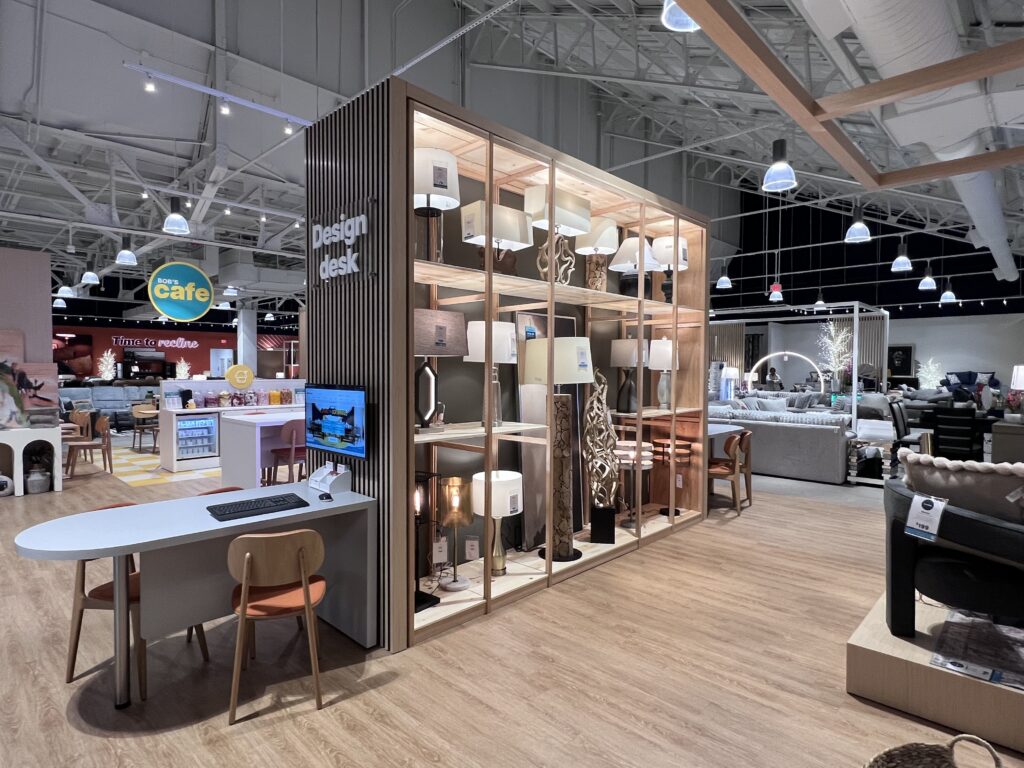
Retail environments are no longer static. Stores must respond to seasonal merchandising, promotional campaigns, new packaging, local assortments, limited-time partnerships, retail media, and omnichannel fulfillment.
Fixtures should support that change rather than restrict it.
Flexible retail millwork may incorporate:
- Adjustable shelves and product supports
- Modular fixture sections
- Interchangeable graphics and signage
- Replaceable panels and trim components
- Configurable accessories
- Standardized mounting systems
- Integrated power and cable-management options
- Components that can be reused across multiple campaigns
These features allow retailers to update presentation strategies without replacing major fixture components every time merchandising requirements change.
Durability remains important, but adaptability has become equally valuable. A fixture that lasts for years but cannot accommodate new products or merchandising strategies may become operationally obsolete long before it physically wears out.
Retail Millwork Should Support Customer Flow and Accessibility
Retail millwork influences how customers move through a store, discover merchandise, and interact with employees. Fixture dimensions, aisle placement, counter configurations, and sightlines can either support an intuitive experience or create unnecessary friction.
Store planning teams should consider how fixtures affect:
- Primary and secondary customer pathways
- Visibility into departments and product categories
- Access to merchandise
- Queue formation near service and checkout areas
- Employee movement behind counters
- Accessibility for customers using mobility devices
The U.S. Department of Justice notes that merchandise shelves, sales counters, service counters, and checkout aisles must be considered as part of an accessible retail environment. Retailers should review the applicable ADA guidance for businesses open to the public and consult qualified accessibility professionals when developing or altering store layouts.
Accessibility should not be treated as an adjustment made after a fixture program is designed. It should be considered during store planning, engineering, and prototype validation.
Retail Millwork Material Selection Is a Business Decision
The best material is not automatically the most expensive material. It is the material that provides the greatest overall value for the fixture’s intended environment and lifecycle.
A luxury retail environment may justify natural hardwoods, premium veneers, specialty metals, or intricate finishes. A high-volume grocery or home improvement environment may prioritize engineered materials and durable laminates that withstand heavy customer interaction while simplifying maintenance.
Every material decision should balance:
- Brand appearance
- Durability and expected traffic
- Product weight and structural requirements
- Manufacturing repeatability
- Cleaning and maintenance procedures
- Material availability and lead times
- Packaging and freight weight
- Installation requirements
- Repair and replacement options
- Total lifecycle cost
Responsible sourcing may also influence material selection. Retailers evaluating wood and wood-based products can learn more about certified material sourcing through the Forest Stewardship Council’s resources for brands and retailers.
Material selection is ultimately an operating decision. The right material must meet visual expectations while continuing to perform under real store conditions.
Retail Fixture Manufacturing Must Balance Quality and Repeatability
Producing one successful fixture does not guarantee a successful store rollout. Large retail programs require the same result to be repeated across an entire production run.
Scalable retail fixture manufacturing depends on clear specifications, production controls, material consistency, documented quality expectations, and communication between engineering and manufacturing teams.
The manufacturing process should be designed to achieve:
- Consistent dimensions across every unit
- Reliable color and finish matching
- Repeatable assembly and hardware placement
- Efficient production at the required volume
- Quality control before fixtures leave the facility
- Packaging appropriate for the fixture and delivery method
- Accurate component counts for each store
For programs involving wood, metal, acrylic, laminates, graphics, and other materials, coordination becomes especially important. Each component must arrive at the right stage of production and fit into the finished fixture as intended.
Assembly, Kitting, and Logistics Protect Store-Level Execution
A correctly manufactured fixture can still fail at the store level when components are missing, shipments arrive out of sequence, or installation teams do not have clear documentation.
Assembly, kitting, labeling, and logistics connect the manufacturing process to the store environment. Depending on the rollout strategy, fixtures may be shipped fully assembled, partially assembled, or broken into installation-ready kits.
Effective rollout preparation may include:
- Organizing components by store location
- Verifying part quantities before shipment
- Labeling packages for installation sequencing
- Creating store-specific bills of materials
- Coordinating deliveries with remodel schedules
- Tracking inventory and replacement components
- Preparing visual assembly and installation instructions
These steps help ensure each location receives the correct fixture package at the correct time, reducing field confusion and avoiding preventable delays.
Successful Retail Fixture Installation Starts Before Crews Arrive
Retail rollouts rarely succeed because installation crews solve every problem in the field. They succeed because the most likely problems were anticipated months earlier.
Preparation may include:
- Store surveys and field verification
- Prototype installation reviews
- Site-specific measurements
- Engineering and constructability reviews
- Store-specific drawings
- Fixture and component inventory planning
- Delivery sequencing
- Coordination with general contractors and store teams
- Installation instructions and escalation procedures
Professional retail fixture installation and store execution helps ensure fixtures are properly positioned, assembled, secured, finished, and aligned with store standards. It also provides a structured way to document field conditions and resolve exceptions without allowing every location to become a separate project.
Retail execution is ultimately an exercise in preparation. Installation is where the planning becomes visible, but the quality of the result is shaped much earlier.
Lifecycle Planning Protects the Retail Fixture Investment
A fixture program should not end when the initial rollout is complete.
Retailers should consider how fixtures will be maintained, repaired, updated, and eventually replaced. Without lifecycle planning, a small damaged component may force the replacement of an entire fixture, or a discontinued material may make it difficult to maintain consistency during future remodels.
Lifecycle planning may include:
- Maintaining approved engineering drawings and specifications
- Documenting finish standards and material selections
- Identifying frequently replaced components
- Stocking critical spare parts
- Creating repair and refinishing procedures
- Planning for future graphic or technology updates
- Tracking fixture generations across the store network
This documentation becomes increasingly valuable as the store fleet grows and different generations of fixtures remain in operation simultaneously.
Customers Notice the Merchandise, Not the Millwork
Customers rarely compliment retail fixtures directly.
Instead, they remember finding products easily. They remember an organized environment that felt intuitive. They remember discovering something unexpected or receiving help at a service counter that functioned the way it should.
The fixture quietly enables each of those experiences.
When retail millwork succeeds, it becomes nearly invisible. It supports the merchandise without competing with it. It reinforces the brand without overwhelming the environment. It helps employees complete daily tasks without creating unnecessary obstacles.
Most importantly, it allows the merchandise and customer experience to remain the focus.
Retail Millwork Is an Execution Discipline
Retail millwork is often viewed primarily as a manufacturing discipline. In practice, it is an execution discipline.
Its success depends on how design, engineering, merchandising, manufacturing, assembly, logistics, installation, store operations, and lifecycle planning work together. A weakness at any stage can affect the performance of the entire fixture program.
As retailers update store formats, accelerate remodel cycles, integrate new fulfillment strategies, and respond to changing customer expectations, the strongest programs will treat fixtures as operational systems—not isolated products.
That is the difference between purchasing millwork and building an infrastructure capable of supporting a retail organization for years to come.
Retail Insight: Great retail environments are not built one fixture at a time. They are built one operational decision at a time.
Plan Your Next Retail Millwork or Fixture Program
Colony Display brings engineering, prototyping, multi-material manufacturing, assembly, logistics, and installation together under one coordinated retail fixture program. Whether you are developing a new store concept, updating an existing department, or executing a multi-location rollout, our team can help carry your design intent from the initial concept through final store execution.
Explore Colony Display’s concept-to-store execution capabilities or contact our team to discuss your upcoming retail program.