

When consumer brands begin planning a new merchandising initiative, the process typically starts with understanding the consumer. Marketing teams invest heavily in research to identify purchasing behaviors, shopping patterns, unmet needs, and the messaging that will best influence buying decisions. Those insights become the foundation for new product launches, promotional strategies, and in-store merchandising concepts designed to increase awareness, expand facings, introduce new SKUs, and grow category sales.
As those initiatives move from consumer marketing to shopper marketing and retail sales, the conversation changes. The objective is no longer simply creating a compelling brand story; it is developing a merchandising program that both the brand and the retailer can embrace.
At this point, many organizations begin searching for a custom fixture manufacturer.
Unfortunately, this is often the moment when the greatest opportunity has already passed.
Too frequently, fixture manufacturers are engaged after the merchandising concept has been finalized, the retailer presentation has been prepared, and internal stakeholders have aligned around a proposed solution. The expectation is straightforward: engineer the fixture, provide pricing, build prototypes, and prepare for production.
While that process may produce a successful display, it underutilizes one of the most valuable resources available to a brand: an experienced fixture partner that understands how retail programs evolve from concept to national rollout.
Manufacturing Is Only One Piece of Commercialization

A fixture program succeeds because far more goes right than the engineering.
Successful commercialization requires an understanding of brand objectives, retailer expectations, operational realities, merchandising strategy, supply chain considerations, installation requirements, and long-term program management. These disciplines rarely exist in isolation. They intersect throughout the life of a retail program, often over many months before the first fixture reaches a store.
Brands frequently operate on annual planning cycles while retailers manage category reviews, promotional calendars, capital investments, and store reset schedules. Missing one retailer’s review window may delay an initiative for months, regardless of how quickly a fixture can be manufactured.
Understanding those decision cycles is just as important as understanding material specifications or production lead times.
The right fixture partner recognizes that reality and plans accordingly.
Rather than waiting for finished drawings, they become involved while merchandising strategies are still being developed, helping evaluate concepts through the lens of retailer execution. They ask different questions, not because they are trying to redesign the brand’s vision, but because they understand the realities of bringing that vision into hundreds or thousands of stores.
- How will the retailer evaluate this proposal?
- Does the concept support the retailer’s merchandising philosophy as well as the brand’s objectives?
- Can store associates replenish it efficiently?
- Will the fixture adapt to multiple store formats?
- Can the program evolve if the retailer requests modifications after initial review?
These conversations rarely reduce creativity. More often, they improve the likelihood that a retailer will support the program in the first place.
Understanding Retailers Is a Competitive Advantage
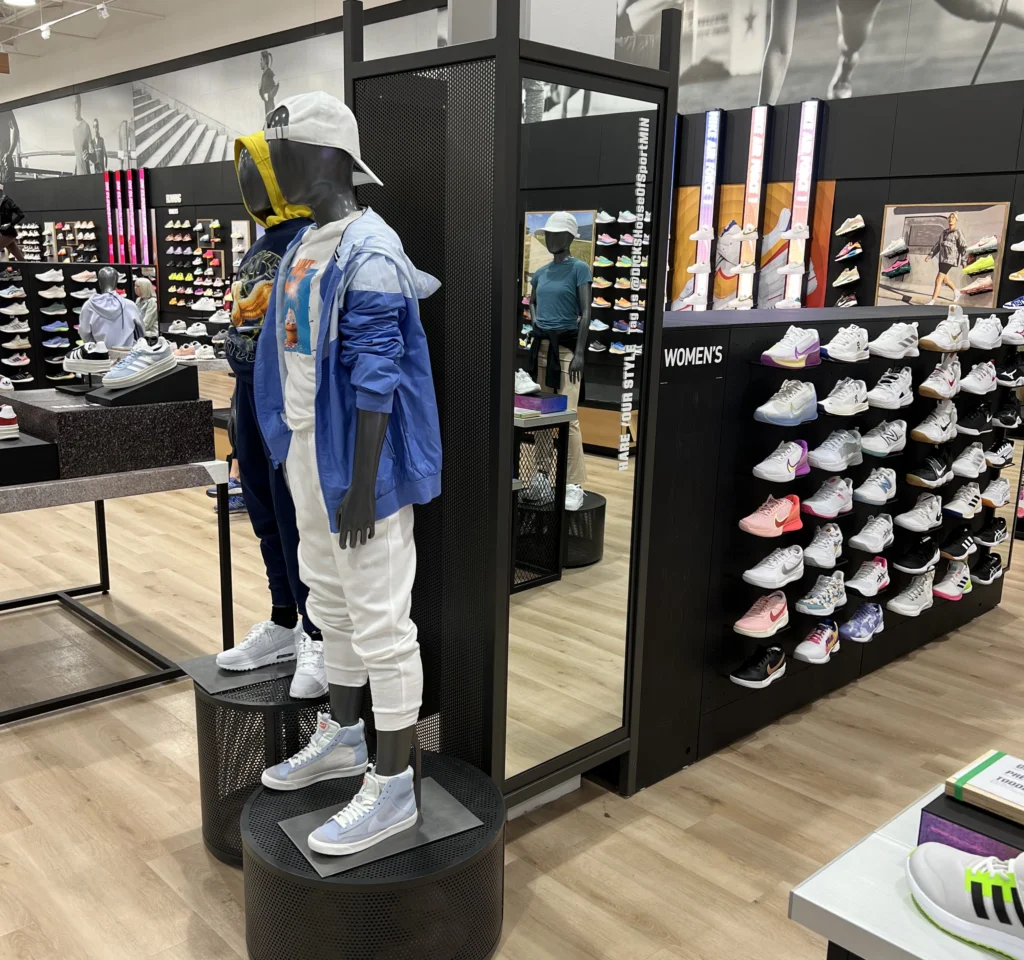
Every national retailer has developed its own operating philosophy, merchandising standards, store aesthetics, and decision-making process.
The merchandising approach that succeeds within a grocery environment may not translate to a home improvement retailer. A specialty beauty retailer evaluates fixtures differently than a convenience chain. Even retailers operating within the same category often have distinct expectations regarding materials, durability, replenishment, labor requirements, and customer experience.
Brands spend years developing relationships with these retailers. Category reviews, assortment planning, line reviews, and promotional opportunities represent long sales cycles built on trust and performance.
A fixture partner should understand those realities.
Not because they replace the brand’s retail sales organization, but because they become an extension of it.
Over time, they learn how the brand presents new initiatives, how individual retail customers evaluate opportunities, what has succeeded previously, and where adjustments may improve acceptance. That accumulated knowledge becomes increasingly valuable with every program.
The Value of Institutional Knowledge
Perhaps the greatest advantage of a long-term fixture partnership is one that receives very little attention.
Institutional knowledge compounds.
Every prototype, rollout, retailer presentation, engineering revision, value-engineering exercise, installation challenge, and merchandising refinement creates knowledge that benefits the next program.
A partner that has worked alongside a brand for several years understands more than engineering specifications. They understand why previous design decisions were made, which merchandising strategies resonated with retailers, where operational challenges emerged, and how different retail environments influenced fixture performance.
That history cannot be recreated through an RFQ.
Nor can it be transferred easily to a new supplier.
Like any trusted business relationship, its value grows over time.
As brands expand into additional retailers, launch new product categories, or pursue broader national distribution, that accumulated understanding allows commercialization efforts to move faster and with greater confidence.
The fixture partner is no longer learning the brand.
They are helping shape its future.
Choosing a Partner for the Long Game
There will always be manufacturers capable of building a fixture from a drawing.
Far fewer organizations invest the time required to understand where a brand is headed over the next three, five, or even ten years.
The distinction matters.
Retail growth is rarely achieved through a single merchandising program. It is built through years of retailer relationships, evolving consumer expectations, category expansion, and continuous refinement of how a brand presents itself in-store.
The fixture manufacturer that delivers the greatest long-term value is not necessarily the one that provides the lowest quote or the fastest prototype.
It is the partner that understands your commercialization strategy well enough to help you navigate retailer expectations, anticipate execution challenges, and develop merchandising solutions that can evolve alongside your business.
The best fixture partnerships begin long before production. They are built on shared planning, mutual trust, and a commitment to supporting a brand’s retail growth year after year.
Ultimately, the most valuable fixture a manufacturer can build is not the display itself.
It is the confidence that your next retail opportunity will be stronger than the last because you have a partner who understands both where your brand has been and where it is going.
Contact Colony Display to discuss how an experienced fixture partner can support your next merchandising initiative from early planning through store execution.